
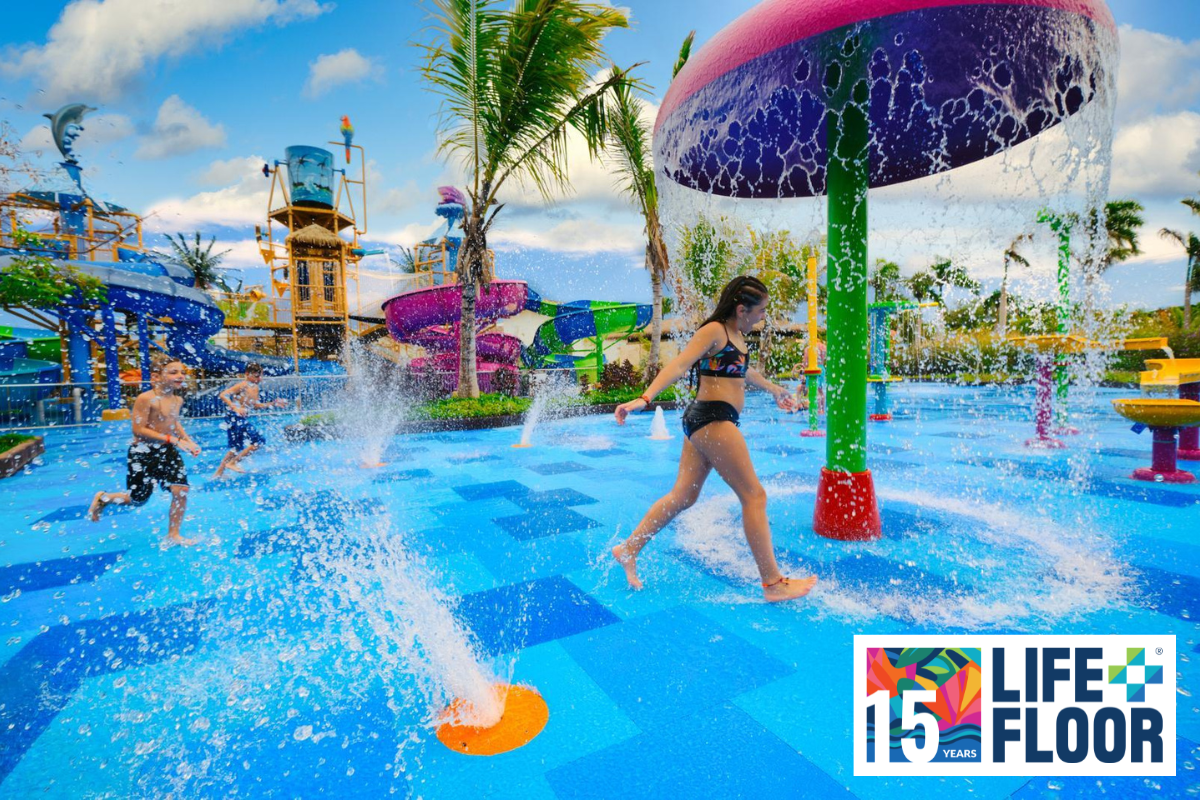
At Life Floor, sustainability isn't a new initiative; it's been part of how we think, build, and grow since day one. As we celebrate 15 years of innovation in aquatic safety surfacing, Earth Week offers a meaningful moment to reflect on how far we've come and where we're going next.
From our earliest days, our focus has been on creating aquatic safety flooring products that last. Durability is one of the most important, and often overlooked, aspects of sustainability. When a product performs longer, it reduces the need for replacement, minimizes waste, and lowers the overall environmental impact. That mindset continues to guide how we design, manufacture, and deliver Life Floor today.
Our Vision for Sustainable Aquatic Flooring Manufacturing
At Life Floor, our vision for sustainability is rooted in continuous improvement and long-term responsibility. We are committed to reducing waste, improving manufacturing efficiency, and building products and processes that support a more sustainable future.
This means making thoughtful decisions at every stage, from how we source and use materials to how we manufacture, package, and deliver our products. As we grow, we are focused on scaling these efforts to not only minimize our environmental impact but also strengthen the performance, longevity, and value of the solutions we provide to our customers.
15 Years of Low-Waste, USA-Made Aquatic Surface Manufacturing
Sustainability at Life Floor has evolved alongside our operations. In the mid-2010s, we made a strategic decision to onshore foam production, bringing manufacturing closer to our North American customers with USA-made aquatic tiles. This shift allowed us to reduce transportation distances, lower shipping-related emissions, and create a more efficient and responsive supply chain.
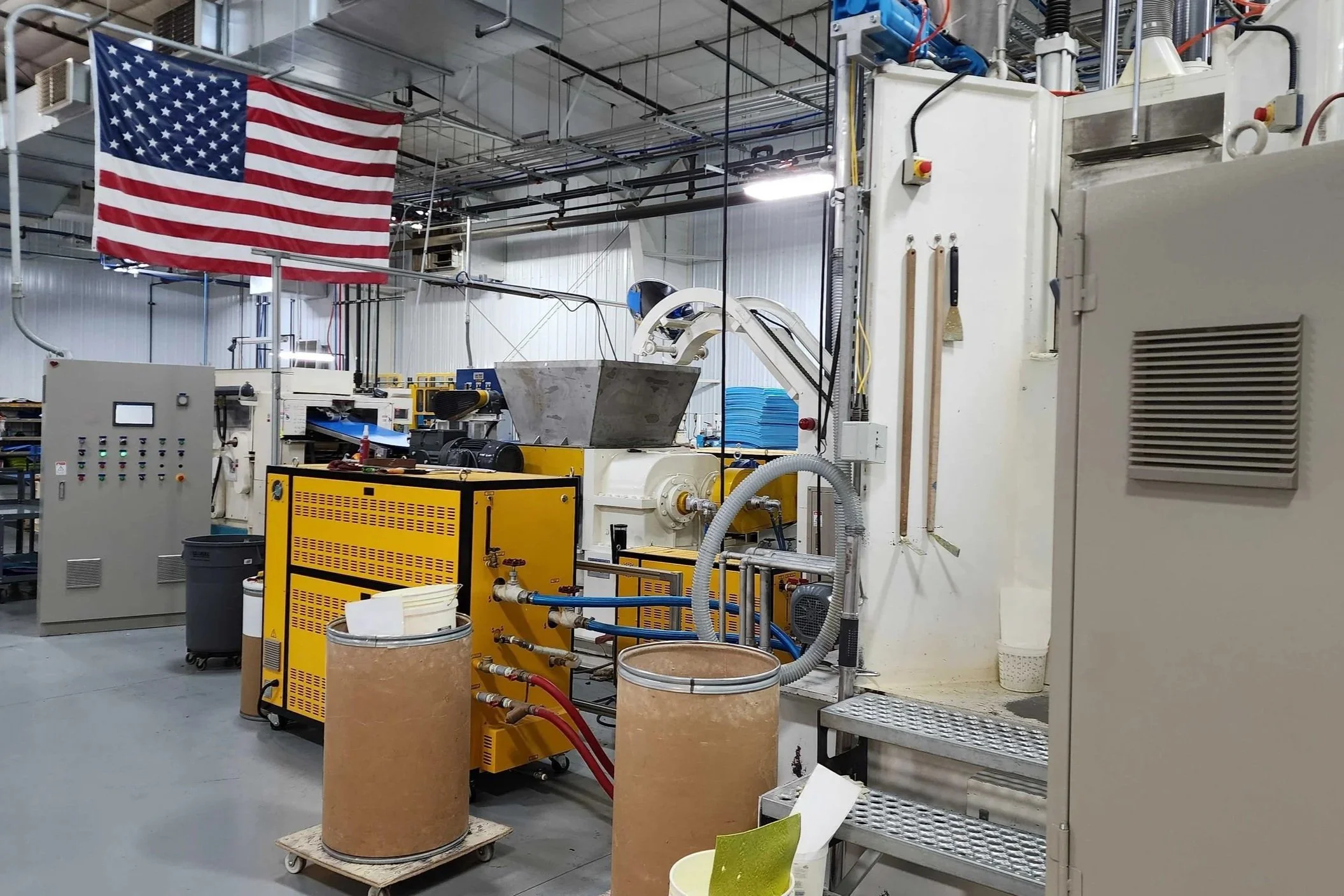
Since then, we've continued to invest in our manufacturing capabilities, not just to scale, but to improve. These investments have led to measurable gains in both efficiency and waste reduction. For example, advancements in our sheeting equipment have reduced material loss during color changeovers from more than 10 pounds per batch to less than 2 pounds. That's a significant step forward in how we use raw materials responsibly when producing closed-cell foam aquatic flooring.
At the same time, improvements in quality yield mean we're producing more usable products with less waste overall, ensuring that every batch contributes more effectively to the final result.

Smarter Materials, Better Processes
Sustainability isn't just about how much we produce; it's about how thoughtfully we do it.
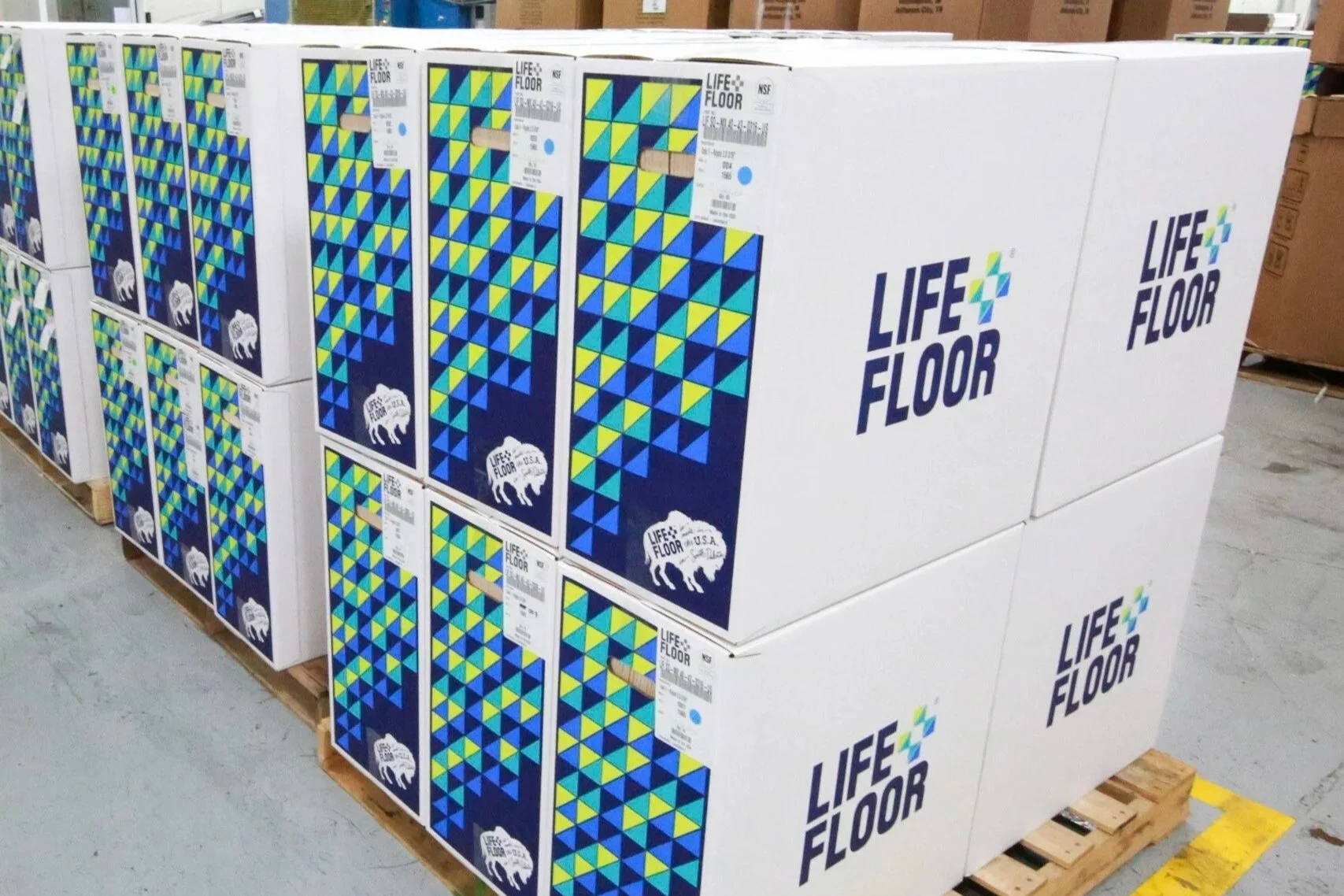
Today, Life Floor uses fully recyclable packaging as part of our broader effort to reduce environmental impact across our operations. While packaging is just one piece of the puzzle, it reflects a larger commitment to evaluating every stage of our process and identifying opportunities to improve.
We're also actively exploring ways to close the loop within our own manufacturing. By developing methods to recycle production trimmings and reincorporate processed foam back into virgin material batches, we're working toward a more circular production model, one that reduces waste and maximizes the value of the materials we use, creating eco-friendly, sustainable aquatic surfacing.
Pursuing ISO 14001: Environmental Management for Aquatic Surfacing
As we continue to grow, we recognize the importance of structure and accountability in achieving our sustainability goals.
This year, Life Floor is beginning the process of pursuing ISO 14001 certification, an internationally recognized standard for environmental management systems. Our goal is to achieve certification next year, providing a formal framework to guide our efforts, set measurable objectives, and ensure continuous improvement across all areas of our operations.
What is ISO 14001 and Why Does It Matter in Aquatic Safety Surfacing?
For those unfamiliar, ISO 14001 is an internationally recognized standard for environmental management systems. It provides a structured framework that helps organizations identify, manage, monitor, and improve their environmental impact over time.
Rather than being a one-time certification, ISO 14001 is built around continuous improvement. It requires companies to set clear environmental goals, measure progress, and regularly evaluate performance. This includes everything from reducing waste and energy use to improving resource efficiency and ensuring compliance with environmental regulations.
For Life Floor, pursuing ISO 14001 is about more than certification; it’s about accountability. ISO 14001 will help us strengthen the systems we already have in place while pushing us to go further, embedding sustainability into every decision we make as an organization.
Toward Fully Recyclable Foam Aquatic Flooring: Life Floor's 5-Year Goal
Our vision for the future is clear: to build products and processes that support long-term environmental responsibility.
Over the next five years, one of our primary goals is to make our foam fully recyclable. This means not only designing materials with end-of-life considerations in mind, but also continuing to refine how we recover and reuse materials throughout production.
By advancing these efforts alongside ISO 14001, we're laying the groundwork for a more circular, efficient, and sustainable manufacturing model.
15 Years In And Just Getting Started
Sustainability at Life Floor isn't defined by a single initiative or milestone; it's the result of consistent, incremental progress over time. From reducing material waste and improving manufacturing efficiency to rethinking how we source, produce, and package our products, every step forward matters.
As we look ahead, we remain committed to doing better for our customers, our industry, and the environment because building safer aquatic environments should also mean building a more sustainable future.