
This is the second post in a three-part series on safety certification in the aquatic industry. In Part 1, we introduced NSF-50 and ASTM, the two primary standards bodies shaping aquatic facility safety, and heard from two of the industry's most respected aquatic designers, Dennis Berkshire and Ken Martin, on why certified products are non-negotiable for their firms. In this installment, we go inside the five-year process that produced the new 2026 ASTM F2461 standard for aquatic play equipment, and hear from the professionals who built it. Read the first blog post.
It started with five words. "All decks should be slip-resistant."
That phrase, tucked into the ASTM F2461 Standard Practice for the Manufacture, Construction, Operation, and Maintenance of Aquatic Play Equipment, had been there for years. And for years, it was exactly as useful as it sounds: a well-intentioned aspiration that nobody could actually measure, enforce, or defend in court.
What qualifies as "slip-resistant" in one jurisdiction may not meet the bar in another. What one operator considers adequate, a plaintiff's attorney might characterize very differently. For Owner/Operators managing aquatic facilities across multiple states, regions, or countries, the vagueness created confusion at best, and liability exposure at worst. That changed in 2026.
After nearly a dozen ballot cycles over five years of collaboration, deliberation, and careful consensus-building, the updated F2461 standard was published this year with clear, technically defensible language for aquatic play surface performance. It defines what "slip resistant" actually means, in measurable, reproducible, enforceable terms, and it assigns clear responsibilities to everyone in the chain: designers, manufacturers, and operators alike.
Building a Standard from the Ground Up
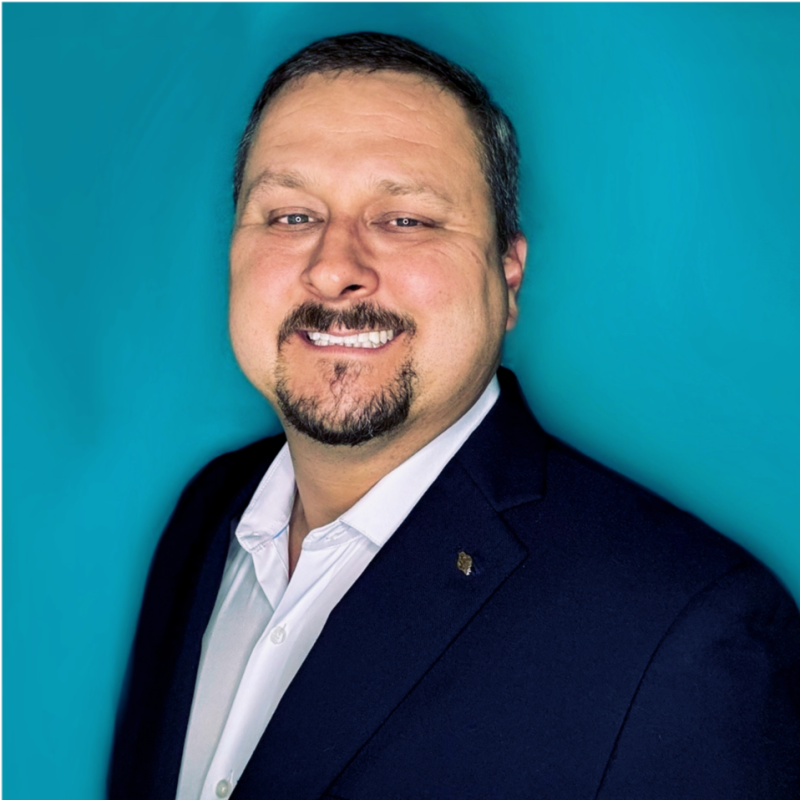
Chris Sumner led the F2461 Task Group through this process. He has been involved with ASTM for approximately a decade, drafting, balloting, and publishing both new standards and revisions to existing ones. He currently serves as Sub-Committee Chair for ASTM F24.70 and has led safety programs and initiatives across multiple major theme parks in the Orlando area.
When the challenge of defining "slip resistance" for aquatic play environments landed on his task group, Sumner's first move was to assemble the right team:
“We brought together a diverse group of professionals with varied backgrounds, perspectives, and expertise. Our initial focus was reviewing existing devices and test methods to determine which might be appropriate for the unique conditions of aquatic play environments, specifically, bare feet on wet surfaces.”
As the work progressed, the group recognized something important: simply quantifying slip resistance wasn't enough. The full picture of safety in aquatic play required a risk assessment–based approach, one that addressed both available friction and impact attenuation.
The final standard did exactly that. It also resolved a persistent ambiguity around accountability: Who is responsible for what, and when?
“Designer/Engineers and Manufacturers are responsible for providing Owner/Operators with guidance and documentation on cleaning, maintenance, and validation of aquatic play surfaces.
In turn, Owner/Operators are responsible for maintaining and validating frictional performance and/or impact attenuation in accordance with that guidance.”
That clarity matters enormously. It doesn't just describe a safer facility; it describes who is responsible for keeping it that way.
The Consensus Process: Harder Than It Looks
If you've never been involved in an ASTM standards process, it's difficult to appreciate just how demanding it is. The committee met in person twice a year, but the real work happened monthly, refining language, building consensus, and responding to negative votes.
Yes, negative votes. In ASTM's consensus process, a single negative vote can halt progress. That's a feature, not a bug; it ensures that every concern is heard and addressed, but it also means that the path from "we think we have language" to "this is published" can take years.
“One of the inherent challenges of consensus standards is that a single negative vote can halt progress. More often than not, however, the feedback behind those votes highlights overlooked issues and ultimately strengthens the final result.”
It took nearly a dozen ballot cycles. It took five years. And when the final report came back with zero negative votes, Sumner shared the news with his group: the new language would be published in the 2026 edition of F2461.
Life Floor CEO Jonathan Keller captured the significance in a message that Sumner noted stood out among the congratulations he received:
“The standard should make millions of people safer and prevent thousands of injuries at parks you will never see or touch... that’s lifetime impact.”
The Engineer's Perspective: Technical Rigor Above All

Claudio Barrera, Senior Director of Manufacturing, IP & Compliance at WhiteWater West, brings a rigorous engineering lens to the standards process. As the past Chair of ASTM F24.70, he supported multiple task groups and authored several ballots that were adopted into the ASTM F2376 standard for water slides.
His view of what ASTM standards accomplish is precise and practical:
“ASTM standards provide an industry-approved guideline to be used by the various engineering design teams. Using the standards as a baseline provides a solid foundation for the design and engineering teams to feed their risk assessments, and to take into consideration various other guidelines as published.”
Barrera also speaks to the professional obligation that licensed engineers carry when specifying third-party products:
“If we are sourcing or specifying products by others, as the engineer/designers, we have an obligation that those products comply with standards as if they were our own.”
That obligation cuts both ways. When a standard exists, engineers have a defensible framework. When it doesn't, or when an operator ignores it, the exposure falls on everyone in the chain.
The International Perspective: Adoption Is the Hard Part
Not everyone in the room agreed from the start.

Rolf Huber, President of Canadian Playground Advisory Inc., brings more than 30 years of experience in athletic, play, and recreation surfaces. He has been an active participant in both CSA (Canadian Standards Association) and ASTM standards since the mid-1990s, and has served as Head of Delegation to ISO TC83 for the United States and Canada since 2011. He is one of the most globally connected experts in the playground and recreation surfacing world.
When the F24.70 task group began its work on slip resistance and friction, Huber was, by his own account, a skeptic. His deep expertise was in fall attenuation, the science of surfaces that protect children from impact injuries, not in the friction-specific demands of aquatic environments. The two disciplines overlap but are not the same, and his initial resistance pushed the task force to sharpen its thinking and language.
He ultimately came to endorse the work the task force produced, and his honest assessment of what comes next is worth reading carefully:
“Commercial organizations like the members of F24 are aware of the liability issue, and compliance with standards is a first line of defense. Having standards that do not make sense or are in conflict does not help.”
On the question of public agencies, parks, municipalities, and school districts, Huber is characteristically candid:
"As to public agencies, they generally do not have a clue. Many of them have conducted lawsuit risk assessments and determined that the risk of a lawsuit is relatively low in both frequency and cost, so they ignore it. There is an education that is needed."
He sees two levers for change: proactive agencies that will step up when presented with clear standards and good information, and the licensed engineering and landscape architecture community, professionals with genuine fiduciary obligations to protect public health and safety.
His point about standards adoption is one the entire industry should sit with: a standard is only as powerful as its uptake. Writing it is the beginning, not the end.
The Friction Scientist: Making "Slip Resistant" Measurable
Underlying all of this work is a technical challenge that most guests never think about: how do you actually measure whether a surface is safe underfoot?

John Leffler has spent his career answering that question. A forensic mechanical engineer and walkway friction researcher, Leffler serves as Chair of the ASTM F13.10 "Traction" Subcommittee and the F15.03 subcommittee for bathing surface safety. He is the lead author of three published ASTM standards and a manufacturer of walkway friction testing devices. His work sits at the intersection of science, standards, and the real world.
His perspective on what ASTM standards should do, and what they shouldn't claim to be, is worth understanding:
“I believe ASTM standards result from a true consensus process with the necessary technical rigor. Adoption of ASTM standards, once published, will depend upon industry inertia, and where there hasn’t been a standard before, upon the workarounds industry has been using in lieu of a standard.”
Leffler's goal is not to tell anyone which product to buy. It is to create the tools that let the right people make informed decisions:
“The goal is to have technically robust friction characterization, so that design professionals and specifiers will be able to make informed decisions.”
That phrase, technically robust friction characterization, is easy to skim past. But it represents years of work. Before a standard like F2461 can tell an operator what their surface must achieve, someone like John Leffler has to build the scientific framework for measuring it reliably, reproducibly, and in conditions that actually reflect how people use aquatic spaces.
How the New Standard Measures Slip Resistance
The updated standard turns that scientific framework into a specific, repeatable test. It endorses the British Pendulum Tester, a portable tribometer used in national standards for pedestrian slip-resistance testing in at least 50 countries across five continents. Rather than relying on a subjective description, the device produces a measurable result reported as a British Pendulum Number, or BPN, also commonly referred to as a Pendulum Test Value, or PTV.
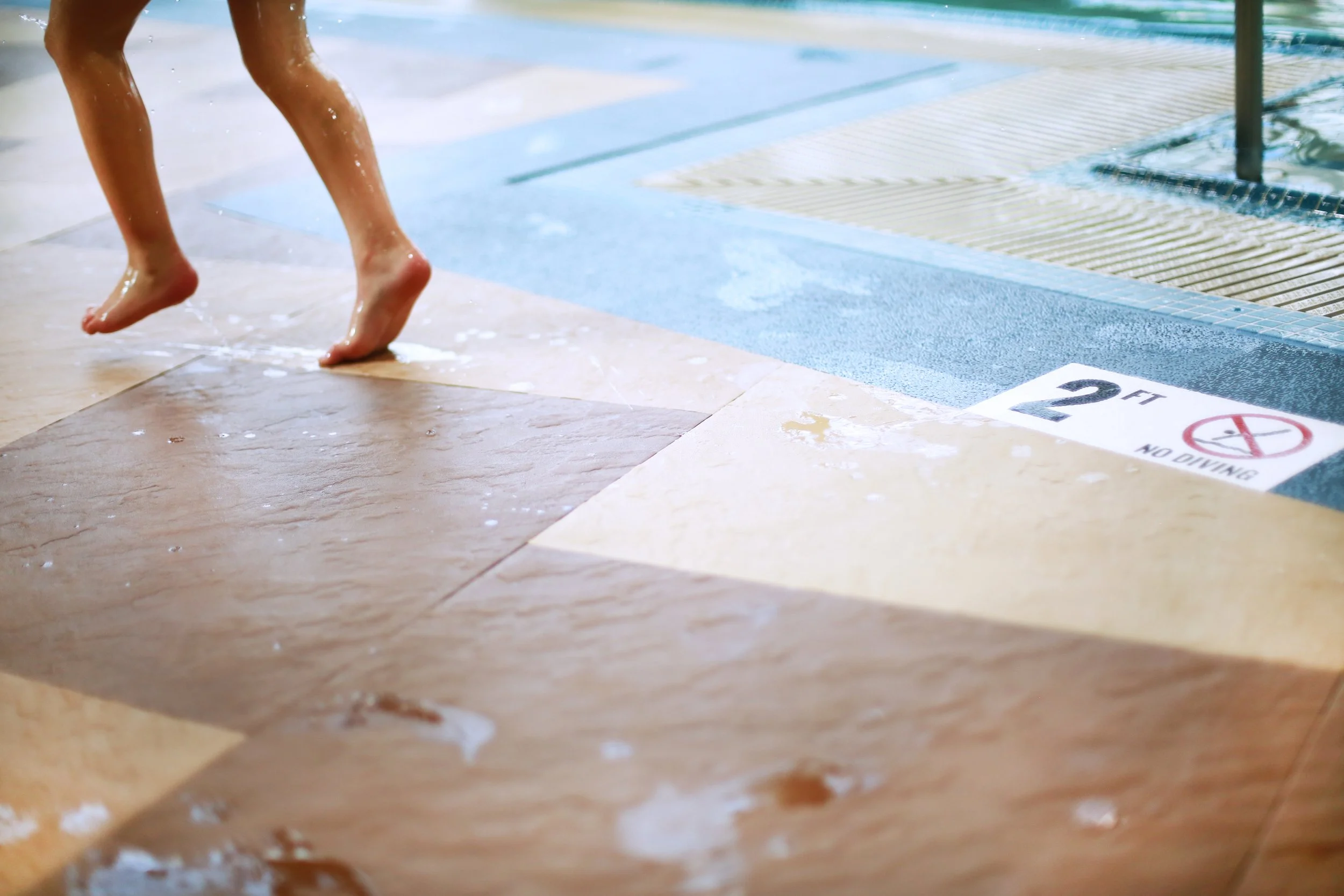
Just as important, the test conditions reflect the way aquatic play surfaces are actually used: by bare feet on wet surfaces. The new requirement specifies the softer Slider 55 rubber, which is intended to represent barefoot contact, with the surface wetted using potable water.
Under the updated requirement, aquatic play surfacing must meet or exceed the P4 classification established by Standards Australia in AS 4586:2013. That level of specificity matters. Instead of simply asking whether a surface appears to be slip-resistant, the standard now identifies the test device, testing conditions, and required performance level, creating a measurable, documented, and validated result over time.
What This Means for You
If you operate an aquatic facility, whether it's a splash pad, a resort waterpark, a community pool, or a themed water attraction, the 2026 edition of ASTM F2461 establishes a new baseline for what your surfaces should do and how you should document and maintain them.
If you design or specify aquatic environments, this standard provides a defensible framework that the old "shall be slip resistant" language never could.
And if you're evaluating surface products for an aquatic project, the question is simple: Does this surface meet the standard? Has it been independently tested and certified to do so?
At Life Floor, the answer has been yes for nearly seven years, and the 2026 F2461 standard reflects much of the same science, rigor, and commitment to measurable safety that our NSF-50 certification represents.
In Part 3 of this series, we hear from Dr. Tara Troxel, a leading expert in injury biomechanics and aquatic facility safety, on what standards mean for injury prevention and what the cost of ignoring them looks like in practice.

Brian Howell is the Director of Strategic Initiatives at Life Floor, where he helps advance safer, more accessible aquatic environments through education, standards development, and industry collaboration. Over the past six years, Brian has represented Life Floor at national conferences and has served on task forces for both NSF/ANSI/CAN Standard 50 and ASTM F24.70.
In his role, Brian works with State Public Health Departments across the country to educate staff on aquatic safety surfacing and support a deeper understanding of how surfacing impacts safety, accessibility, and long-term facility performance. He also assists in coordinating Life Floor’s involvement with the NSF/ANSI/CAN Standard 50 task group and ASTM F24.61 discussions related to aquatic play environments.
Brian enjoys serving as a resource for aquatic professionals, helping connect operators, regulators, designers, and industry partners with the information they need to create safer and more inclusive aquatic spaces.
Life Floor is the only safety surface manufacturer NSF-certified to NSF/ANSI/CAN Standard 50. Learn more at lifefloor.com