
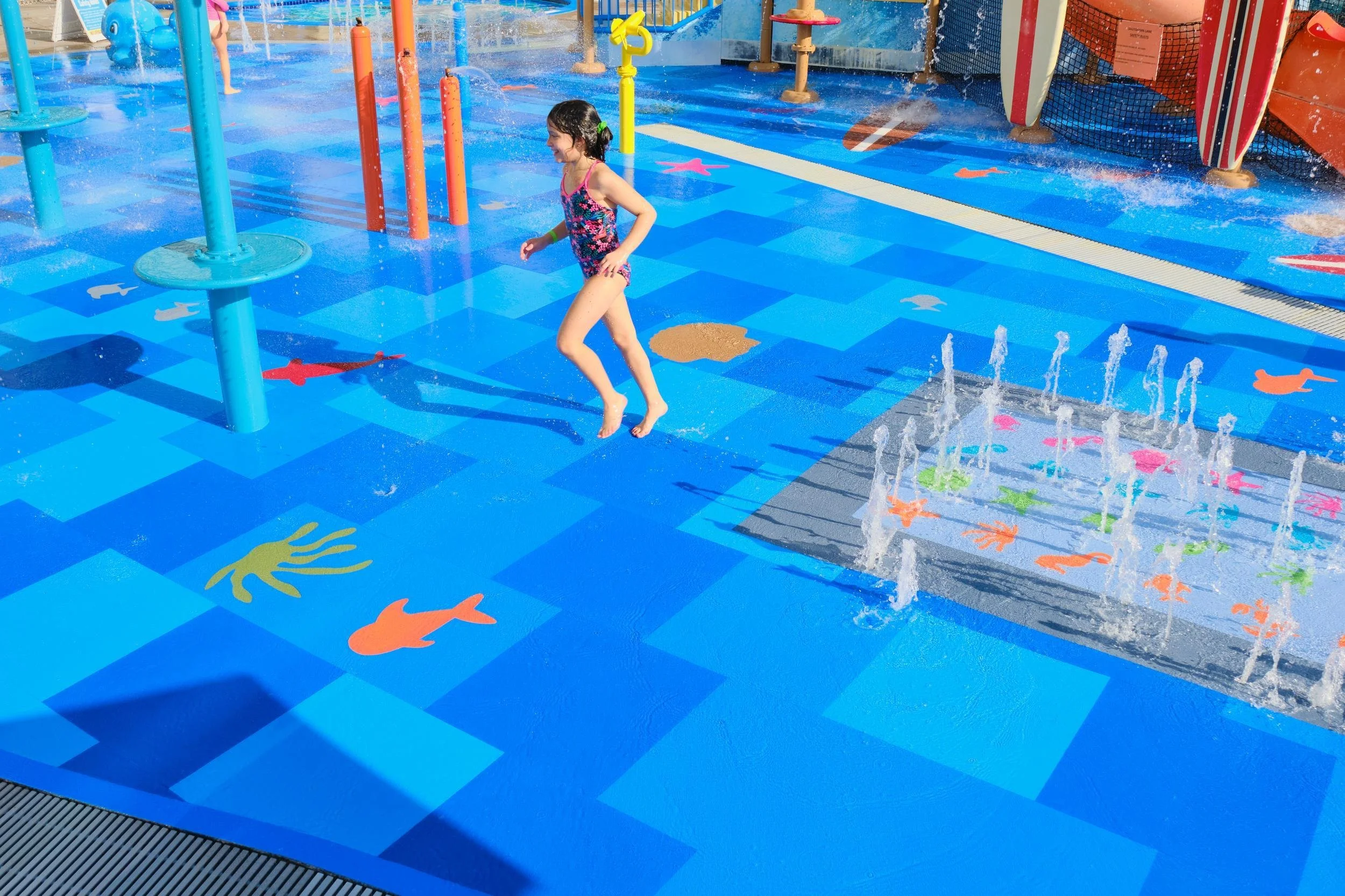
Walk into any great aquatic facility, a splash pad at a community park, a water feature at a resort, a competitive pool at a recreation center, and you're surrounded by decisions that were made long before a single drop of water hit the deck. Decisions about drainage, lighting, chemistry, and filtration. And, critically, decisions about the surfaces guests walk, run, and play on.
Those surface decisions carry real consequences. Slip-and-fall injuries at aquatic facilities are among the most common and preventable incidents in the industry. Yet across the country, designers, specifiers, and facility operators continue to select surfacing without the benefit of rigorous, independent testing and certification.
For more than six years, Life Floor has had the privilege of participating in two of the most important standards-setting bodies in the aquatic world: NSF/ANSI/CAN 50 and ASTM International's F24 Committee. Over that time, we've worked alongside some of the most respected professionals in the industry to raise the bar for what "safe" actually means underfoot. In this series, we asked several of those colleagues to share their perspectives on why certification matters to guests, designers, operators, and the industry at large.
What Are These Standards, and Why Do They Exist?
Before diving into what our expert panel had to say, it's worth taking a moment to understand what these standards actually are.
NSF/ANSI/CAN 50
With more than 50 years of history in testing and certifying pool equipment, NSF provides the most widely recognized certification services in the aquatic industry. NSF-50 defines performance validation, operational safety, and testing criteria for pool and spa products. Certification to this standard is required by the Model Aquatic Health Code and most U.S. state and local pool codes.
The NSF-50 Joint Committee consists of public health officials, industry members, and user representatives, a diverse body of experts responsible for developing standards consistent with NSF's public health mission.
ASTM International F24 Committee on Amusement Rides & Devices
ASTM International is one of the largest independent standards-writing bodies in the world, creating standards across hundreds of industries. The F24 Committee, one of ASTM's largest, with more than 1,000 voting members, establishes standards for the design, manufacturing, testing, operation, maintenance, inspection, and quality assurance of amusement rides and devices, including aquatic play equipment.
These standards are built through a rigorous, collaborative process involving consumer advocates, government officials, equipment manufacturers, amusement park operators, and industry suppliers, all working toward a single shared goal: making the global amusement industry as safe as possible.
Why Certified Products? Hear It from the Experts.
We reached out to a panel of leading professionals across aquatic design, engineering, safety consultation, and standards development. Here is what they told us.
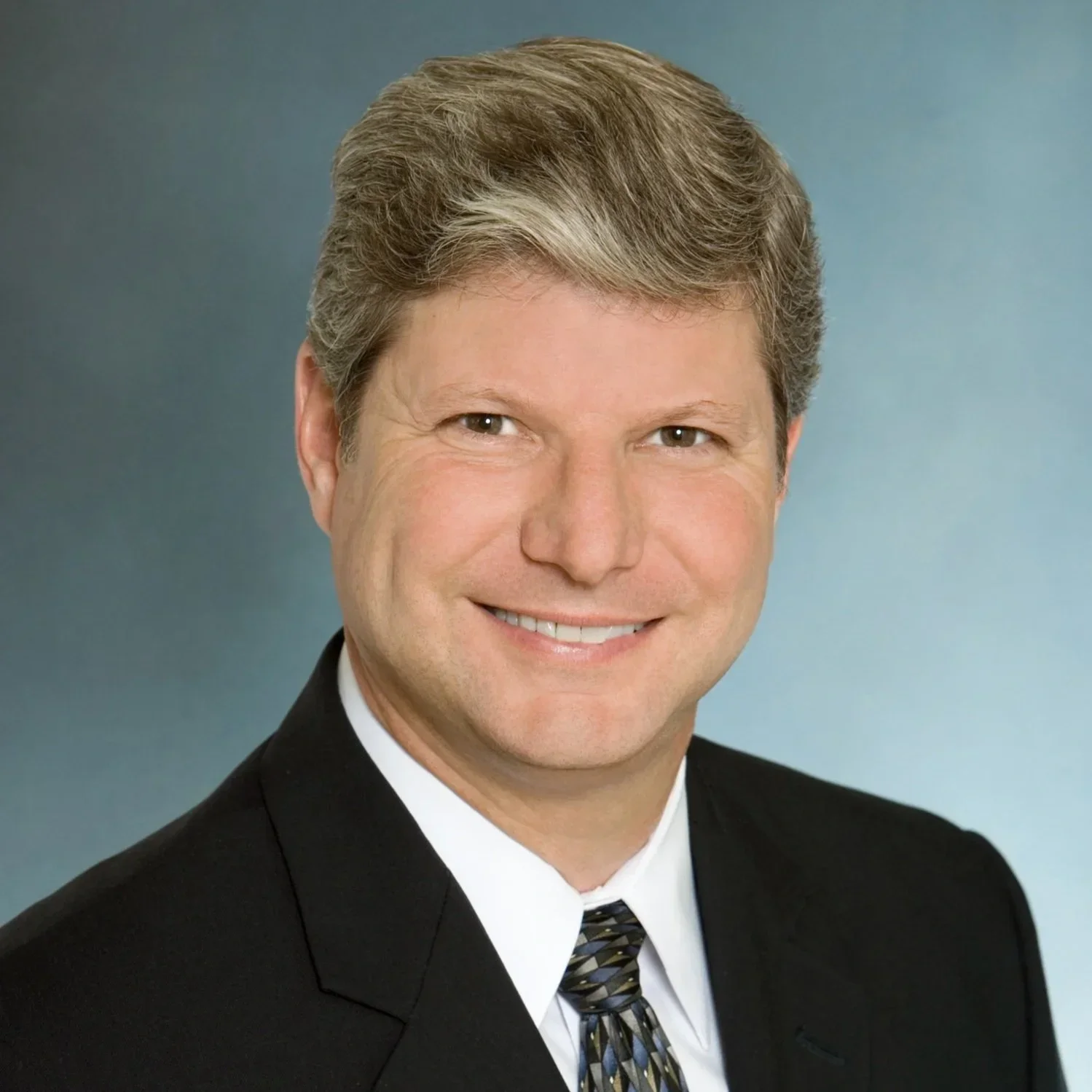
Dennis Berkshire | Founding Principal, Aquatic Design Group
Dennis Berkshire of Aquatic Design Group has been designing world-class aquatic facilities since 1984. He is a voting member and former chairman of the technical committee of the NSF-50 Joint Committee. His perspective on certification is shaped by decades of observing what happens when it's present and when it's not.
“Most state and local codes require equipment and materials used for public swimming pools to be tested and certified to meet the minimum NSF standards. Specifying products that have been tested by an accredited testing laboratory and certified to meet NSF standards provides an extra level of protection for all parties involved. It protects the end-users, the facility owners, and the designers, contractors, architects, and engineers.”
Berkshire points out that most guests simply assume aquatic facilities are safe and healthy, the same way they assume a restaurant has passed its health inspection. NSF certification is the mechanism that makes that assumption warranted:
“NSF was created to establish minimum standards for products used in various parts of our daily lives, from drinking water to food and beverage industries to recreational water facilities, with a mission to protect and advance human health.”
On the question of what goes wrong without it, Berkshire's experience is instructive. He has seen projects where surface materials were selected by architects unfamiliar with aquatic environments, materials that looked fine aesthetically but failed to maintain adequate slip resistance within months of opening. In one case, safety mats had to be deployed shortly after a new natatorium opened. In another, an outdoor aquatic complex required emergency remediation after a landscape architect specified a deck material that degraded rapidly under real-world conditions of water, foot traffic, and chemical exposure.
“Unfortunately, most building and health codes do not have details or specific standards for aquatic environment surface materials. In some cases, a designer may be focused on the aesthetics of a design and assume all materials can meet the health and safety requirements.”
NSF certification closes that gap. Certified surfaces are tested not just for initial slip resistance, but for long-term performance, their ability to withstand chemical exposure, resist biofilm growth, maintain cleanability, and sustain frictional properties through years of real use.

Ken Martin | Founding Principal, Martin Aquatic
Ken Martin founded Martin Aquatic in 1987 and has spent nearly four decades specifying products for some of the world's most complex aquatic facilities. His firm's policy is simple and uncompromising: NSF-50 listed products, without exception.
“Martin Aquatic specifies the use of specific listed NSF certified equipment, materials, and products that automatically assures our clients that we purposely only specify NSF Standard 50 listed equipment, materials, and products without exception.”
Martin's firm recently had a front-row seat to what failure looks like. An Interactive Water Feature in Florida, built with a non-NSF-listed safety surface, experienced near-total surface failure within months of opening. The facility was closed to the public. A multi-year litigation followed that cost the client millions of dollars and required complete demolition and redesign of the deck. Martin Aquatic was brought in as the replacement engineer.
“Once Martin Aquatic was asked to re-design the failure and oversee the selection of a Life Floor NSF-certified product, which was then installed, the project reopened, and is continuing now by serving the client very well.”
His warning to the industry is clear: products that haven't been thoroughly tested don't just underperform, they create client crises, legal exposure, and costly remediation.
““Regrettably, many products have not been tested thoroughly, and it is difficult to establish how uncertified products might endure real-world circumstances and weather conditions, while remaining beautiful and safe.””
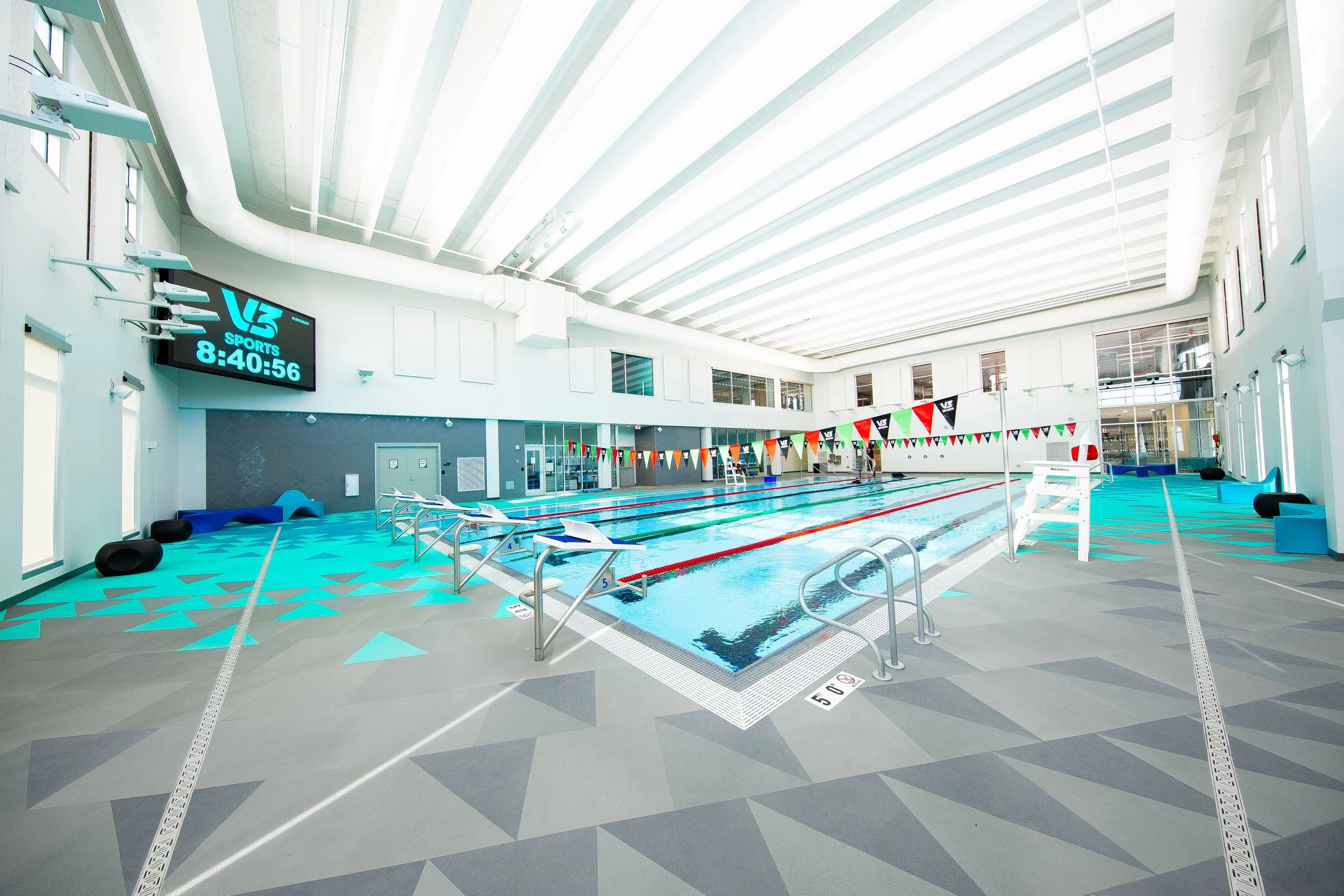
At the time of this writing, Life Floor is the only safety surfacing material NSF-listed
in accordance with NSF Standard 50.
A Final Word on Standards and the Standard of Care
ASTM and NSF standards don't exist in the abstract. They exist because real people get hurt on surfaces that fail, and because the aquatic industry, at its best, is full of professionals who refuse to accept that as inevitable. As Dennis Berkshire put it:
““Most industry professionals look at ASTM, NSF, and ANSI standards as vehicles that assist us in our professional lives, raising the standard of care and reliability for ourselves and our industries. Since we cannot be subject matter experts on all facets of our industry, we can rely on these standards to establish minimum industry standards of care.””
For Life Floor, NSF-50 certification isn't a marketing claim. It's a commitment to guests, to operators, to designers, and to the professionals who trust us to deliver surfaces that perform as promised, day after day, season after season.
In Part 2 of this series, we'll go inside the multi-year process that produced the new 2026 ASTM F2461 standard for aquatic play equipment, and hear from the professionals who made it happen.

Brian Howell is the Director of Strategic Initiatives at Life Floor, where he helps advance safer, more accessible aquatic environments through education, standards development, and industry collaboration. Over the past six years, Brian has represented Life Floor at national conferences and has served on task forces for both NSF/ANSI/CAN Standard 50 and ASTM F24.70.
In his role, Brian works with State Public Health Departments across the country to educate staff on aquatic safety surfacing and support a deeper understanding of how surfacing impacts safety, accessibility, and long-term facility performance. He also assists in coordinating Life Floor’s involvement with the NSF/ANSI/CAN Standard 50 task group and ASTM F24.61 discussions related to aquatic play environments.
Brian enjoys serving as a resource for aquatic professionals, helping connect operators, regulators, designers, and industry partners with the information they need to create safer and more inclusive aquatic spaces.
Life Floor is the only safety surface manufacturer NSF-certified to NSF/ANSI/CAN Standard 50.
Learn more at lifefloor.com